
The Dissolving Landscape: Ella Morton
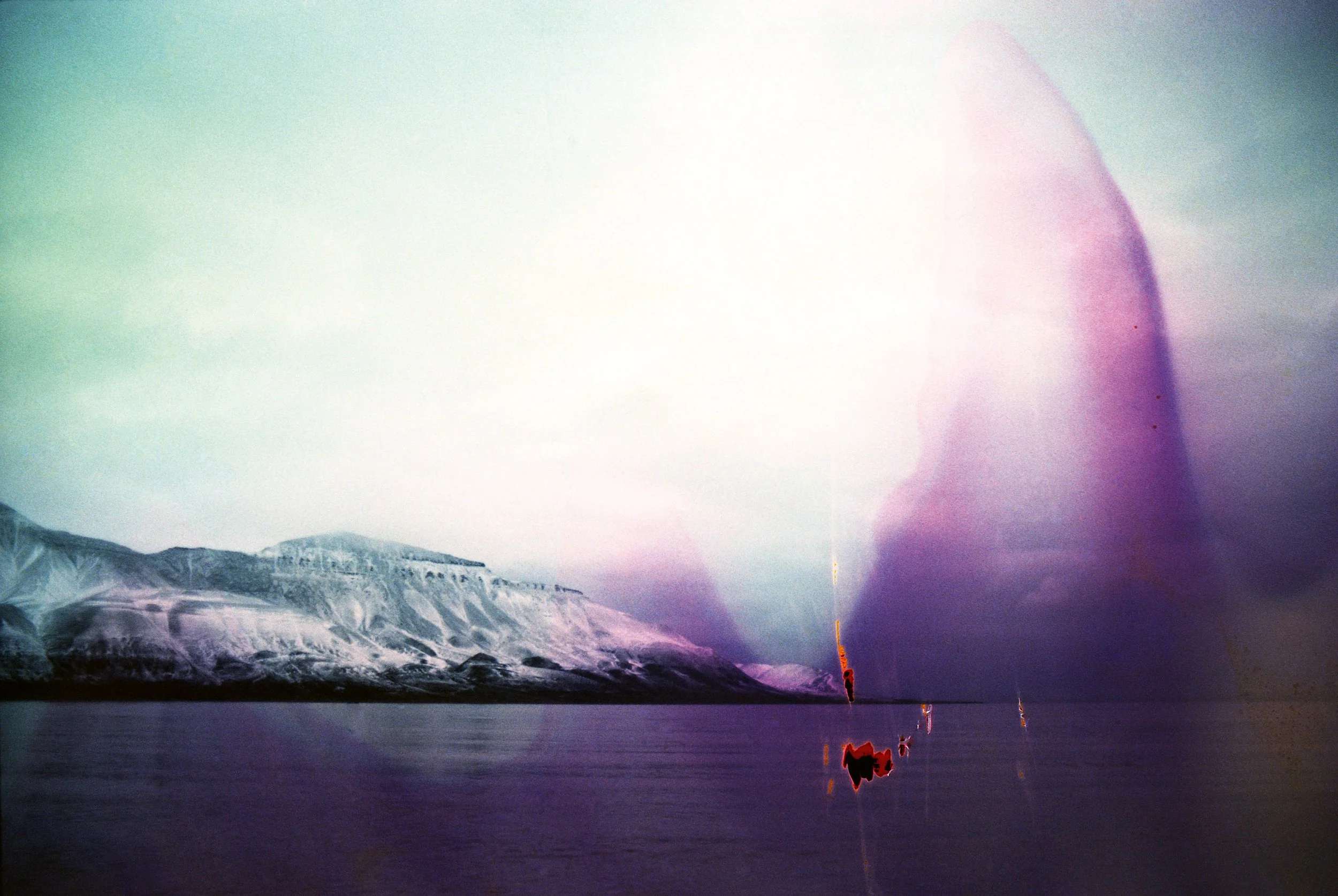
Can you tell us about yourself, your background and how you first came to photography? I grew up in Vancouver, Canada. Vancouver is a city that fuses urban and natural spaces really well and there is a strong outdoor adventure culture there. While my work tends to focus on exploring landscapes that are unfamiliar to me, growing up in Vancouver probably imbued in me a respect and reverence for nature. I started experimenting with photography as a teenager. I always wanted to become some kind of artist, but I veered towards photography because I love the element of surprise inherent in analogue processes. You are never completely in control of the images you're making, but sometimes the medium gives you something unexpected that is better than what you had originally envisioned.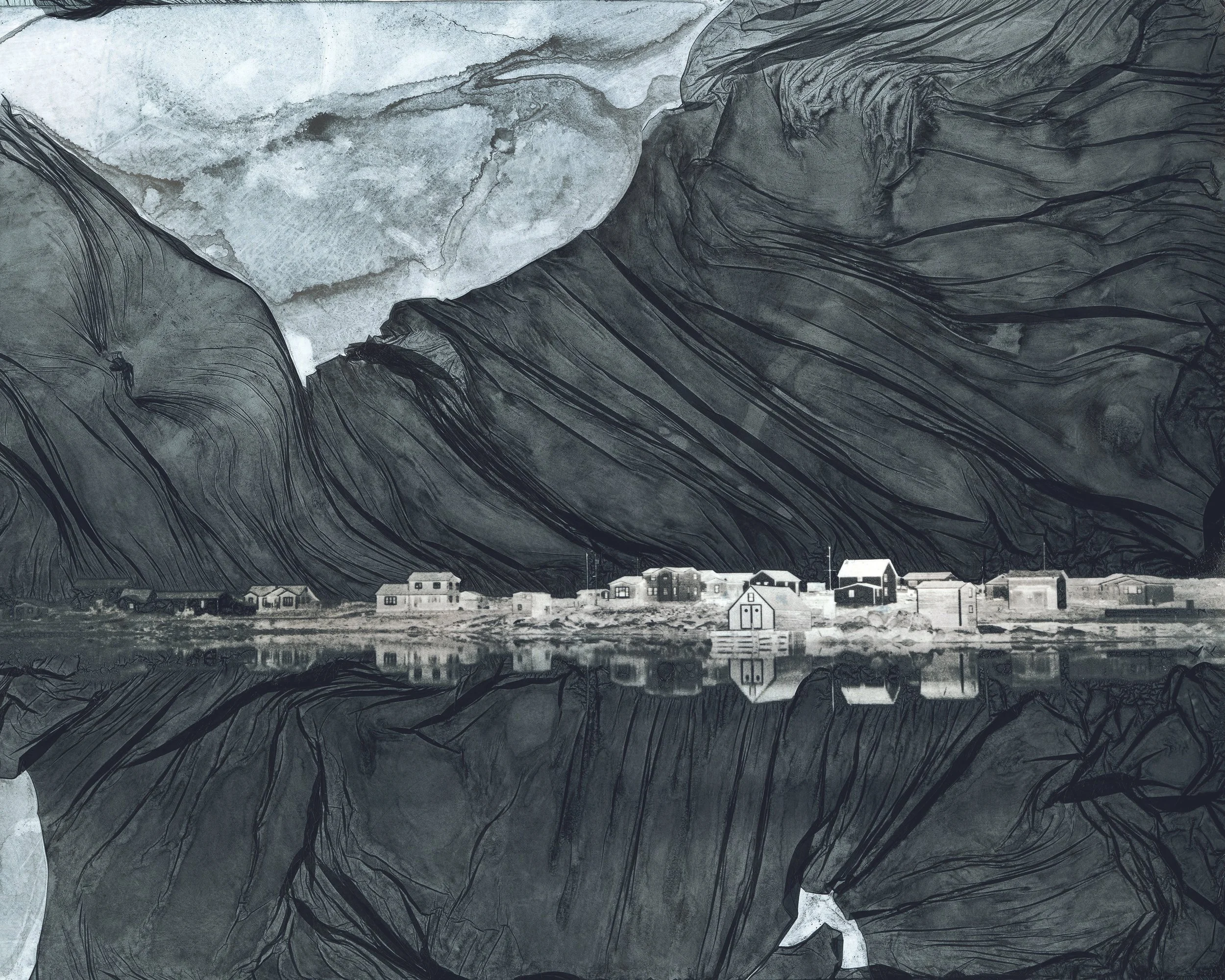
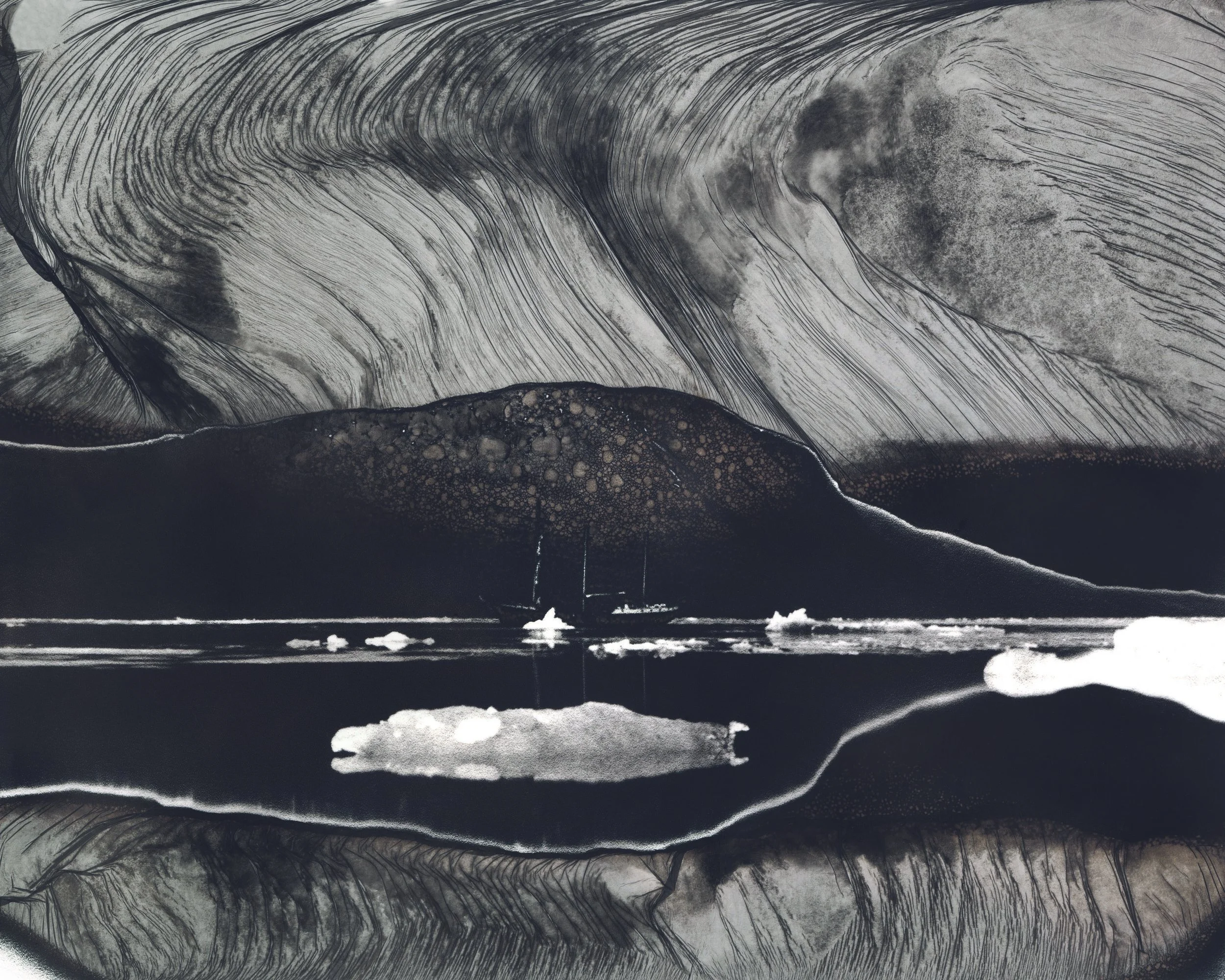
How did you first come up with the idea for the series « The Dissolving Landscape »? I started working on The Dissolving Landscape in 2016 when I participated in The Arctic Circle program, a residency where artists sail around Svalbard (in the Norwegian Arctic) for two weeks on a tall ship. On this journey, I brought 4x5 colour film that I had soaked, or “souped” as many folks call it, in different acidic solutions (everyday things like wine, lemon juice and other liquids). The warping effects on the film evoked both the sublime and fragile qualities of Svalbard’s landscape. At the time, I thought that this would be the entire project- one place, one photo process. However, I soon realized that I could express this same concept through other alternative processes. I was also drawn to other Northern landscapes, particularly in Canada, but also in Nordic Europe. I began experimenting with mordançage and used this process on images I captured in Finland and Newfoundland in 2018. In 2019, I traveled to Nunavut in the Canadian Arctic, photographing for both film soup and mordançage images, as well as Super 8mm footage for a short film project.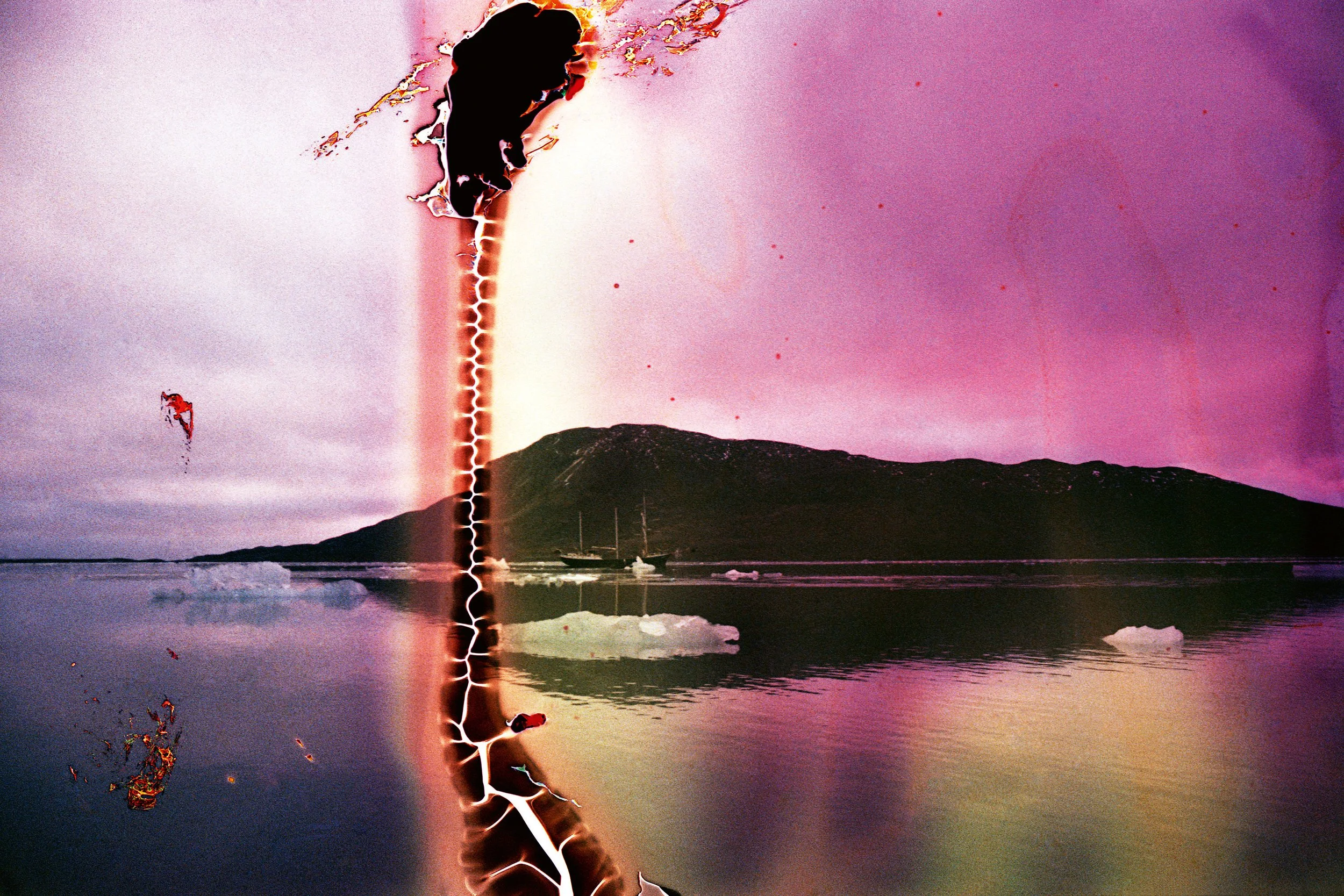
Can you explain what are the analogue processes you used in this series? What is mordançage? Mordançage is a copper-based bleach that reacts with the silver halide particles in black and white prints, lifting the emulsion off the paper to create unique textures and veils. My goal in using this process is to capture the transcendent and precarious qualities of the landscape. The ways in which the images melt and degrade highlight the spiritual power of the natural environment and also lament its destruction as the planet warms.I use mordançage and film soup techniques on the photographs in this project. For my films, I also treat 16mm celluloid with mordançage, as well as bleach (using varnish and oil as resists), spray paint, soil and coloured inks. Lately, I’ve been pushing the boundaries of what mordançage can do as a process, experimenting with it on colour film and seeing how it translates in different ways in the moving image. What drew you to these experimental analogue processes and what are the biggest challenges when working with them?I’m drawn to experimental analogue processes, because they can show us the world in a way we’ve never seen before. I think finding new ways to seeing is so important in this post-digital era of easy and relentless image production and reproduction. I am also drawn to experimental analogue processes because of their unpredictability. Many folks would call the unpredictability a challenge- how you have to work by trial and error and how labour-intensive it is. Honestly though, these are the things I love about it. I think my personality lends itself well to embracing uncertainty and working in a way that’s spontaneous and unmeasured. Perhaps then, the biggest challenge is just the ever-rising cost of film.Your work not only addresses climate change and the environment, but it also questions the medium of photography itself. Can you expand on how? In the last couple decades, image consumption and production has changed so much. The proliferation of consumer photography through the emergence of smart phones and social media has challenged artists to approach photography in new ways. It has freed up analogue technology to be used more creatively. I think it’s similar to the crisis painting went through in the second half of the 19th century after the invention of photography- once painters no longer had the responsibility of depicting accurate renditions of reality, they had to ask themselves what painting could still offer. Then came movements like impressionism, expressionism, cubism, dada, surrealism and so forth. Technological innovation liberates older mediums to be used in more interesting ways. 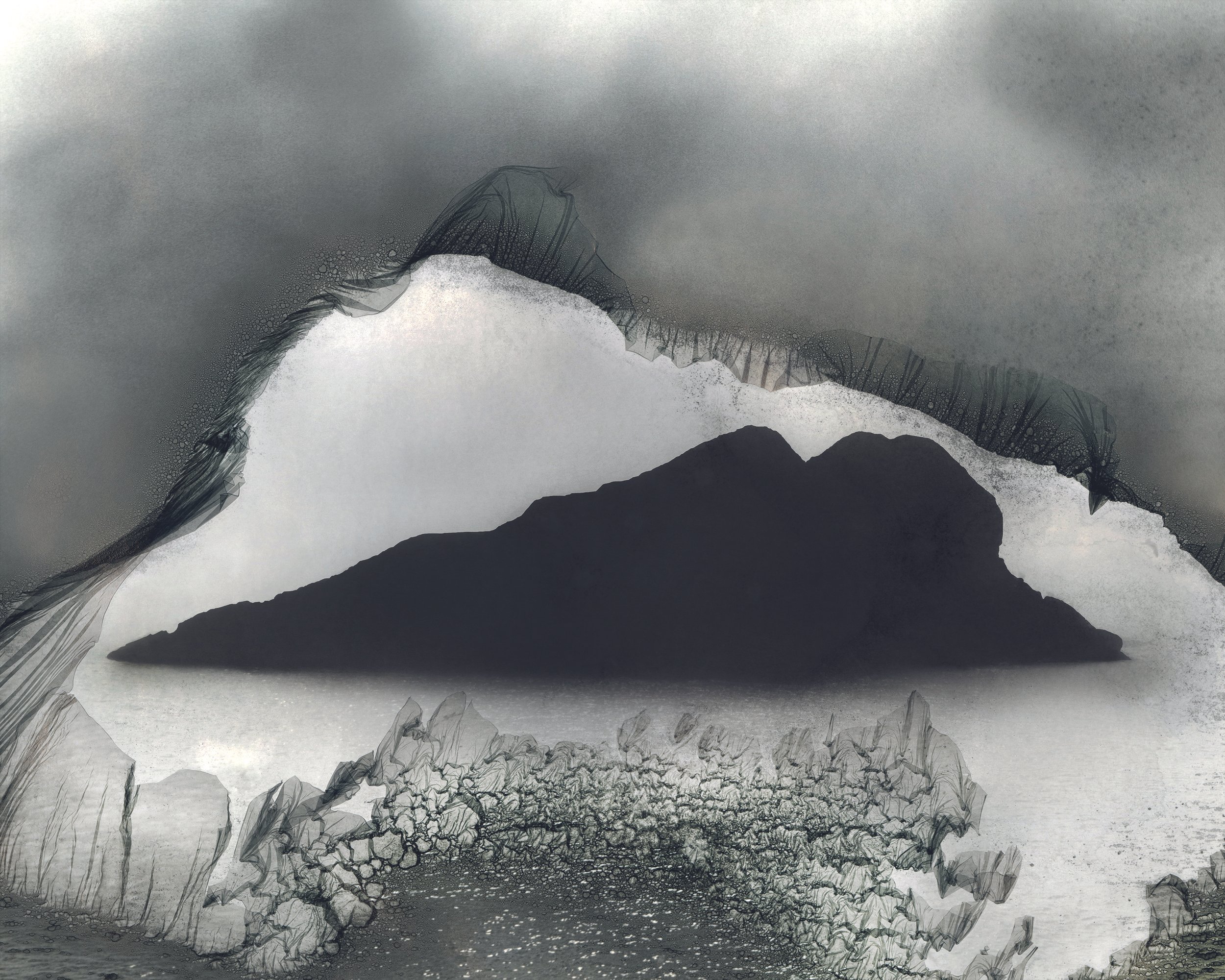

You describe your practice as expedition-based and this issue of the magazine is about adventure. Can you tell us about a moment while working on this series which felt the most adventurous? I suppose the most obvious moment of adventure was when I was on a tall ship in the South Atlantic Ocean that got struck by lightning. It was a trip I took in late 2021 to work on art projects, but also to celebrate life again after my mother’s death in 2020. We were en route from Uruguay to South Georgia and Antarctica and we hit a huge storm. After an extremely rough night, we heard a huge bang at 6am- lightning had struck the main mast. No one was hurt, but there was a small fire in the wheel house and several of the electronic navigation systems were destroyed. The rest of the trip was cancelled and we spent the next two weeks sailing to the end destination of Ushuaia, Argentina. Fortunately, I was able to book a second trip to Antarctica on a more conventional cruise ship and had an amazing time there, as well as an extra week exploring some of the quieter parts of Tierra Del Fuego. I made a film about the lightning and its aftermath on the ship, which I think made a much better story than if the trip had gone as planned.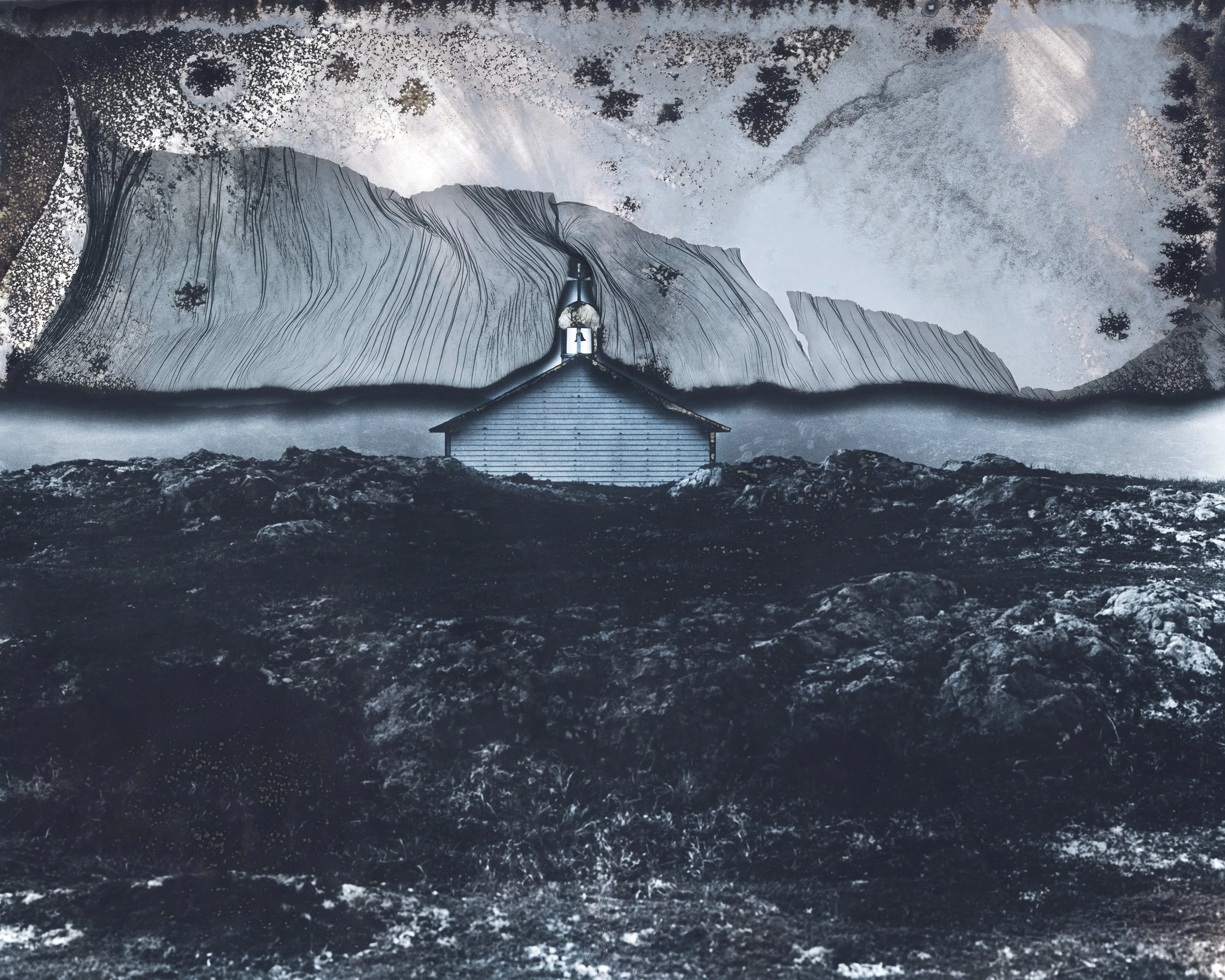
Ella Morton is a Toronto-based visual artist, photographer and filmmaker. Her expedition-based practice has brought her to projects across Canada, Scandinavia, Greenland and Antarctica. She uses experimental analogue processes to capture the sublime and fragile qualities of remote landscapes. Reflecting on how lens-based media is changing in the digital age, she aims to uncover how images can show more than a straightforward depiction of reality, and how the alchemy of analogue techniques can be reinvented in the present day to tell deeper stories. ellamorton.com@ellasharpmortonElla Strowel is a Belgian-British, London based curator interested in thought-provoking and conceptual photographic work, experimental analog processes that push the boundaries of photography and supporting emerging artists. She holds a BFA in Photography from the Paris College of Art and an MA in Curatorial Studies from KASK Conservatorium in Ghent. She has worked for Fisheye Gallery in Paris and in Arles, and is currently the Gallery Manager at Atlas Gallery in London.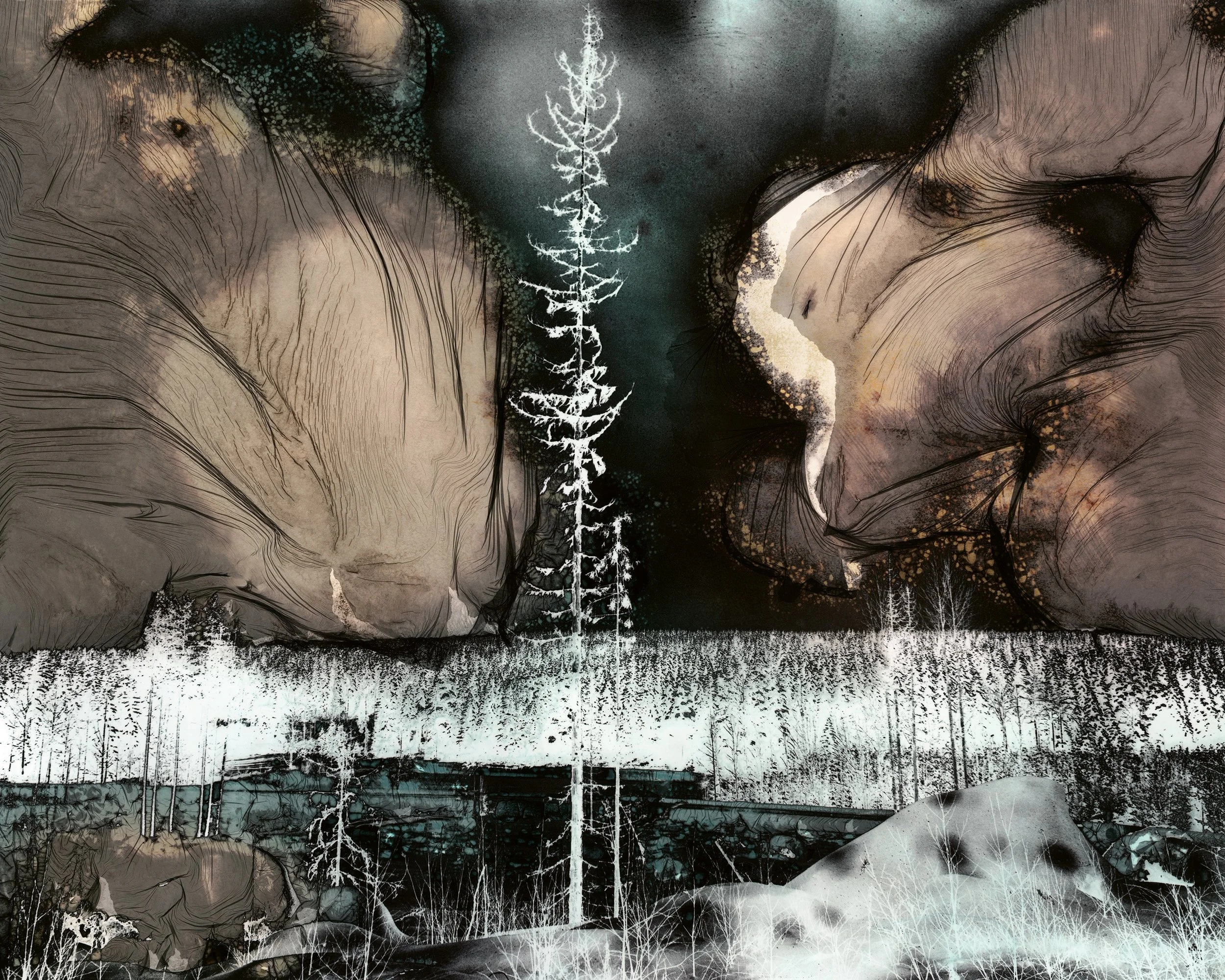
originally published in print in the adventure issue #8, MARCH 2024
Interview by Ella Strowel